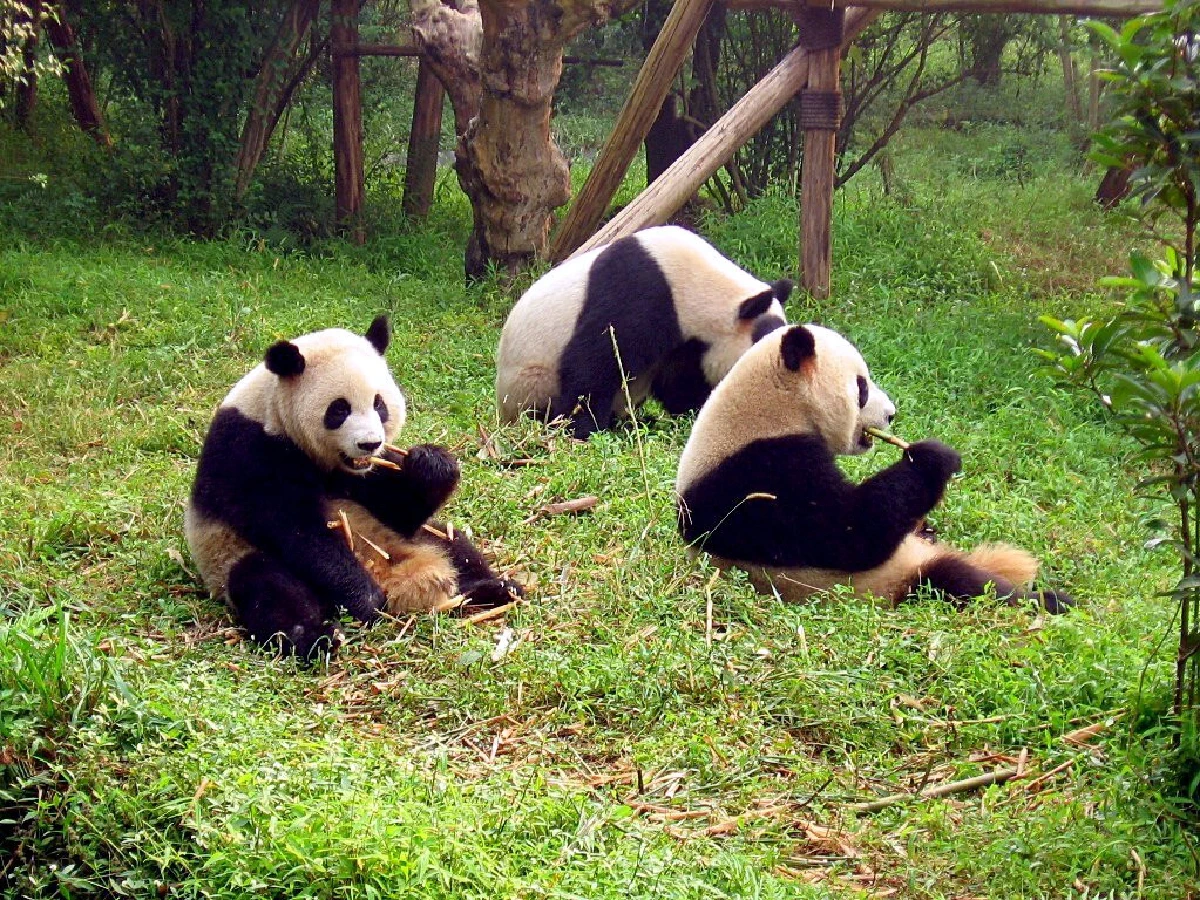
Photo by Colegota, licensed under CC BY-SA 2.5 Spain
成都基地
Chengdu (day trip)
The Chengdu Research Base of Giant Panda Breeding, about 2 hours from Chongqing by high-speed train, is one of the world’s most important facilities for giant panda conservation and research. Home to over 150 pandas — roughly a quarter of all captive pandas globally — the base combines scientific research with public education and wildlife viewing in a natural, forested setting that closely mimics the pandas’ native habitat.
The base was established in 1987 with just six pandas rescued from the wild. Today it serves as both a working research institute and a major tourist attraction, with multiple breeding programs, veterinary care facilities, and behavioral studies ongoing behind the scenes. Visitors walk through different zones housing pandas of various ages: playful cubs in nursery areas, juveniles in mid-range enclosures, and adult breeding pairs in more spacious territories. The best time to visit is early morning, when the pandas are most active — they’re typically sluggish during the afternoon heat.
Beyond pandas, the base also houses red pandas, snow leopards, and other endangered species in a campus-style park setting surrounded by bamboo groves and native forest. Several museums on-site cover panda ecology, conservation history, and the base’s research achievements. The experience is well-organized for visitors of all ages, though it can get crowded during peak seasons.
Practical details: The base is large enough to occupy 3–4 hours comfortably. Wear comfortable walking shoes — there’s substantial ground to cover. Bring sun protection and water, especially in summer. Photography is permitted, and close-up encounters are possible, though the pandas’ welfare is prioritized over visitor convenience (no forced interactions or performances).